Champagne has long been associated with celebrations, special occasions, luxury dining and elegant entertaining. While Champagne is excellent when served on its own, it is also an important ingredient in many popular cocktails. From the classic Mimosa and Bellini to the French 75, Kir Royale and modern fruit-forward Champagne drinks, sparkling wine can add freshness, bubbles and sophistication to a wide variety of cocktails.
For restaurants, hotels, bars, event companies, retailers and beverage distributors, understanding the most popular Champagne cocktails can also provide useful insight into customer demand. Cocktail menus frequently use sparkling wine as a premium ingredient, while brunch venues and hospitality businesses rely heavily on Mimosas and similar drinks.
Another common search is “most popular Champagne for Mimosas.” The ideal choice depends on the desired sweetness, flavor profile, budget and quantity required. A dry sparkling wine or Brut Champagne is often selected when the mixer contributes sweetness, while different Champagne styles can be used to create different results.
This guide explores the most popular Champagne cocktails, the best styles for Mimosas, how to choose Champagne for cocktails, popular Champagne brands, serving ideas, cocktail ingredients, wholesale purchasing considerations and frequently asked questions.
If you are researching Champagne for personal use, a restaurant, bar, hotel, event or wholesale distribution business, understanding the differences between Champagne styles and cocktail applications can help you select products more effectively.
What Are the Most Popular Champagne Cocktails?
The most popular Champagne cocktails combine sparkling wine with ingredients such as citrus, fruit purée, sugar, liqueurs, bitters and spirits.
Some of the best-known Champagne cocktails include:
- Mimosa
- Bellini
- French 75
- Kir Royale
- Champagne Cocktail
- Aperol Spritz
- Hugo Spritz
- Rossini
- French 76
- Death in the Afternoon
- Champagne and Chambord
- Champagne with elderflower
- Champagne with peach purée
- Champagne with fresh berries
Each drink has a different flavor profile.
Some are citrus-forward, some fruit-forward, some sweeter and others more spirit-forward.
The popularity of these cocktails also varies by market. Mimosas are strongly associated with brunch, while French 75 cocktails are frequently found on classic cocktail menus. Bellinis are particularly popular in brunch and Italian-inspired hospitality settings.
For businesses, offering several Champagne cocktails rather than only one can allow a bar or restaurant to appeal to different customer preferences.
Most Popular Champagne Cocktails for Parties
Champagne cocktails are particularly suitable for parties because sparkling wine can be served quickly and incorporated into simple recipes.
Popular choices include:
Mimosa
A classic Mimosa combines sparkling wine with orange juice.
It is simple, refreshing and suitable for brunches, weddings, breakfasts, receptions and celebrations.
Bellini
A Bellini traditionally combines sparkling wine with peach purée or peach nectar.
It offers a softer fruit profile than a Mimosa and works particularly well for brunch and summer events.
French 75
The French 75 combines gin, lemon juice, sugar and Champagne.
It is more complex and spirit-forward than a Mimosa.
Kir Royale
Kir Royale combines crème de cassis with Champagne.
The blackcurrant liqueur gives the cocktail a distinctive color, sweetness and berry flavor.
Champagne Cocktail
A classic Champagne Cocktail traditionally combines a sugar cube and bitters with sparkling wine.
It provides a simple but elegant alternative to fruit-based cocktails.
Most Popular Champagne for Mimosas
When choosing the most popular Champagne for Mimosas, the main consideration is balance.
Orange juice is naturally sweet and acidic. A Champagne that is crisp, refreshing and not excessively sweet can complement the juice effectively.
For many Mimosas, Brut Champagne is a practical choice.
Brut Champagne generally has a relatively dry profile, allowing the orange juice to provide much of the cocktail’s fruit sweetness.
However, Champagne can be expensive compared with other sparkling wines. For large brunches, weddings, hotels and high-volume events, businesses may therefore consider the cost per serving before selecting a bottle.
Important considerations include:
- Dryness level
- Acidity
- Fruit character
- Price
- Bottle size
- Availability
- Brand recognition
- Customer expectations
- Intended serving volume
A premium Champagne may be appropriate for a luxury brunch, while another sparkling wine may be more practical for a large event.
The key is matching the product to the occasion and budget.
What Champagne Is Best for a Mimosa?
A dry or moderately dry sparkling wine is often suitable for Mimosas.
Brut Champagne is one option, but Prosecco, Cava and other sparkling wines are also widely used in Mimosas.
If using Champagne specifically, a Brut style can provide a crisp base that works well with orange juice.
A restaurant serving premium Mimosas may choose a recognizable Champagne brand as part of its menu positioning.
For wholesale buyers, the decision should also consider:
- Wholesale bottle price
- Case quantity
- Bottle size
- Available inventory
- Best-before or quality considerations
- Transportation
- Storage
- Customer demand
- Brand positioning
For commercial Champagne sourcing, businesses can begin by exploring the Drinks Department BV wholesale beverage supplier.
Should You Use Brut Champagne for Mimosas?
Brut Champagne is a popular choice because its relatively dry character can balance the sweetness of orange juice.
The result is generally refreshing rather than excessively sweet.
The amount of orange juice can also be adjusted.
For example, a lighter Mimosa can contain more juice, while a Champagne-forward version can contain more sparkling wine.
Restaurants should standardize the recipe so customers receive a consistent drink each time.
Can You Use Rosé Champagne for Mimosas?
Yes.
Rosé Champagne can create a visually attractive Mimosa with a pink or salmon-colored appearance.
It can also introduce red-fruit and berry notes depending on the Champagne.
Rosé Champagne can be particularly suitable for:
- Weddings
- Valentine’s Day events
- Mother’s Day brunches
- Luxury brunches
- Afternoon receptions
- Birthday celebrations
- Special events
A premium rosé Mimosa can also be positioned as a higher-priced cocktail on a restaurant menu.
Most Popular Champagne Cocktail: Mimosa
The Mimosa is arguably one of the most recognizable sparkling-wine cocktails.
Its popularity comes from its simplicity.
A basic Mimosa uses:
- Sparkling wine
- Orange juice
Some variations add:
- Orange liqueur
- Fresh orange garnish
- Blood orange juice
- Grapefruit juice
- Peach juice
- Pineapple juice
- Passion fruit juice
For hospitality businesses, the Mimosa is attractive because the recipe is easy to standardize.
A bar can also create a Mimosa menu with several juice options.
For example:
Classic Mimosa: Orange juice and Champagne
Blood Orange Mimosa: Blood orange juice and Champagne
Pineapple Mimosa: Pineapple juice and Champagne
Passion Fruit Mimosa: Passion fruit juice and Champagne
This allows a restaurant to use one sparkling wine base for several menu variations.
Most Popular Champagne Cocktail: Bellini
The Bellini is another internationally recognized sparkling wine cocktail.
It traditionally combines sparkling wine with peach purée.
The peach provides natural sweetness and fruit aroma, while the sparkling wine adds acidity and carbonation.
A Bellini is particularly suitable for:
- Brunch
- Summer menus
- Italian restaurants
- Weddings
- Hotel breakfasts
- Afternoon events
Fresh peach purée can provide a premium presentation, although commercial peach nectar or purée may be easier for high-volume operations.
Most Popular Champagne Cocktail: French 75
The French 75 is one of the best-known classic cocktails featuring Champagne.
The traditional recipe combines:
- Gin
- Fresh lemon juice
- Sugar syrup
- Champagne
The cocktail provides acidity, sweetness, spirit character and carbonation.
For cocktail bars, the French 75 can be a premium alternative to simpler sparkling-wine cocktails.
It is also suitable for celebratory occasions where customers want something stronger and more complex than a Mimosa.
Most Popular Champagne Cocktail: Kir Royale
Kir Royale combines crème de cassis and Champagne.
The blackcurrant liqueur gives the drink a distinctive berry flavor and color.
It is simple to prepare and can work well as an aperitif.
For events, the deep red color also makes the drink visually distinctive.
A bar can adjust the amount of crème de cassis depending on the desired sweetness and intensity.
Most Popular Champagne Cocktail: Classic Champagne Cocktail
The classic Champagne Cocktail is simple and elegant.
A traditional preparation includes:
- Champagne
- Sugar cube
- Angostura-style aromatic bitters
The sugar cube slowly dissolves while the sparkling wine provides carbonation.
This drink can appeal to customers who prefer a classic cocktail rather than a fruit-heavy option.
It also demonstrates that Champagne cocktails do not necessarily need multiple ingredients.
Most Popular Champagne Cocktail: Rossini
The Rossini is a variation of the Bellini.
Instead of peach, it uses strawberry purée.
This gives the cocktail a bright red or pink appearance and a fresh berry character.
The Rossini can be particularly attractive for:
- Summer menus
- Valentine’s events
- Wedding receptions
- Brunches
- Fruit-focused cocktail menus
Rosé Champagne can also be considered for a more intensely colored presentation.
Most Popular Champagne Cocktail: French 76
The French 76 is related to the French 75 but generally uses vodka instead of gin.
It combines:
- Vodka
- Lemon juice
- Sugar
- Champagne
This creates a clean and citrus-forward cocktail.
For bars offering both French 75 and French 76, the difference in base spirit gives customers an easy choice.
Most Popular Champagne Cocktail: Death in the Afternoon
Death in the Afternoon combines Champagne with absinthe.
It is a more unusual cocktail and is associated with classic cocktail culture.
Because absinthe has a distinctive flavor, this cocktail is more niche than the Mimosa or Bellini.
Nevertheless, it can appeal to customers interested in classic or unusual cocktails.
Most Popular Champagne Cocktails With Fruit
Fruit and sparkling wine work naturally together.
Popular combinations include:
- Champagne and orange
- Champagne and peach
- Champagne and strawberry
- Champagne and raspberry
- Champagne and passion fruit
- Champagne and pineapple
- Champagne and grapefruit
- Champagne and blood orange
- Champagne and cranberry
- Champagne and pomegranate
For restaurants, fruit-based Champagne cocktails can also create seasonal menus.
For example, summer menus may emphasize peach, strawberry and passion fruit, while winter menus may feature cranberry, pomegranate and citrus.
Best Champagne for a Wedding
Wedding Champagne should be selected according to the style and budget of the event.
Some weddings use Champagne for the toast only, while others serve it throughout the reception.
For large events, buyers should calculate the number of guests and estimated consumption.
A premium Champagne may be appropriate for the wedding toast, while another sparkling wine can be used for cocktails.
Alternatively, a single recognizable Champagne brand can be used across the event for consistency.
Businesses sourcing Champagne for weddings should consider:
- Number of guests
- Number of bottles required
- Cocktail versus straight service
- Bottle size
- Glassware
- Chilling capacity
- Delivery
- Storage
- Event duration
Best Champagne for Brunch
Brunch is one of the strongest occasions for Champagne-based cocktails.
The Mimosa remains a classic choice because orange juice complements sparkling wine naturally.
Bellinis are also popular.
A brunch menu can offer:
- Classic Mimosa
- Peach Bellini
- Strawberry Rossini
- Blood Orange Mimosa
- Grapefruit Mimosa
- Passion Fruit Mimosa
Hotels and restaurants may offer unlimited or fixed-price brunch packages, making cost management particularly important.
For high-volume service, buyers should calculate the cost per cocktail rather than only the cost per bottle.
How Many Mimosas Can You Make From One Bottle of Champagne?
The number of Mimosas depends on the glass size and recipe.
A standard 750 ml bottle contains approximately 25.4 US fluid ounces.
If a cocktail uses approximately 3 ounces of sparkling wine, one bottle provides around eight servings before accounting for small serving variations.
If the recipe uses less sparkling wine and more juice, the number of cocktails can increase.
For commercial operations, the best method is to establish a standard pour and calculate exact cost per serving.
This helps restaurants determine menu pricing and expected beverage margins.
How Much Champagne Should You Buy for a Party?
The quantity depends on:
- Number of guests
- Duration of the event
- Whether Champagne is the only alcoholic drink
- Whether Champagne is served straight
- Whether cocktails are offered
- Bottle size
- Expected consumption
For a wedding or corporate event, professional beverage planning should take the entire drink menu into account.
If Champagne is being used primarily for Mimosas, the business can calculate the required number of bottles based on the expected number of cocktails.
Champagne Cocktail Ingredients
The ingredients used in Champagne cocktails vary widely.
Common ingredients include:
Citrus
Orange and lemon are among the most common.
Fruit Purée
Peach and strawberry are popular.
Liqueurs
Cassis, orange liqueur and elderflower liqueur can add flavor and sweetness.
Spirits
Gin and vodka are commonly used in Champagne cocktails.
Sugar
Sugar syrup or sugar cubes can balance acidity.
Bitters
Bitters add complexity to classic recipes.
Fresh Garnishes
Orange peel, lemon peel, strawberries, raspberries and herbs can improve presentation.
Champagne Cocktails for a Restaurant Menu
A restaurant does not need dozens of Champagne cocktails.
A focused menu can include several recognizable drinks.
For example:
- Classic Mimosa
- Peach Bellini
- French 75
- Kir Royale
- Strawberry Rossini
- Champagne Cocktail
This gives customers a range of options while keeping the ingredient list manageable.
A restaurant can also create a seasonal special using the same Champagne base.
Champagne Cocktails for Hotels
Hotels can use Champagne cocktails across multiple service areas.
These may include:
- Breakfast
- Brunch
- Poolside service
- Rooftop bars
- Weddings
- Corporate events
- Room service
- Restaurants
- Lounges
Premium Champagne brands can be particularly relevant for luxury hospitality environments.
Hotels should balance brand positioning with cost per serving and expected guest demand.
Champagne Cocktails for Bars
Cocktail bars may use Champagne in both classic and modern recipes.
The French 75 is particularly useful because it combines a familiar spirit with sparkling wine.
Other options include:
- French 76
- Kir Royale
- Champagne Cocktail
- Elderflower Champagne cocktail
- Raspberry Champagne cocktail
- Citrus Champagne cocktail
Bars can also use premium Champagne as an upgrade option.
Most Popular Champagne Brands for Cocktails
When customers ask about the most popular Champagne for cocktails, brand recognition can be an important factor.
Well-known Champagne names can help communicate quality and familiarity.
Some brands commonly encountered in premium Champagne markets include:
- Moët & Chandon
- Veuve Clicquot
- Dom Pérignon
- Ruinart
- Bollinger
- Krug
- Laurent-Perrier
- Ace of Spades
- Luc Belaire
- Le Chemin du Roi
However, not every product is intended for exactly the same use.
A prestige vintage Champagne may be more appropriate for sipping than for mixing into a cocktail where fruit juice or liqueur dominates the flavor.
For cocktail programs, businesses should therefore balance product quality, brand positioning, recipe requirements and cost.
Moët & Chandon for Champagne Cocktails
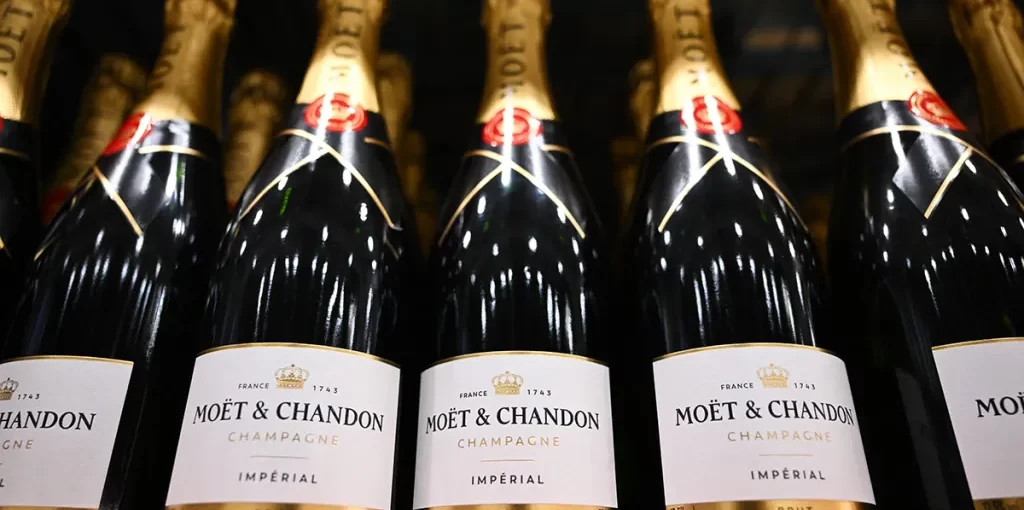
Moët & Chandon is one of the best-known Champagne houses internationally.
Its range includes products used for celebrations, hospitality and premium beverage service.
For businesses researching commercial supply, Moët & Chandon Imperial Brut Champagne wholesale can be considered when evaluating premium Champagne purchasing.
For a cocktail menu, Brut Champagne can provide a dry sparkling base that works with fruit juices and other cocktail ingredients.
Moët & Chandon Ice Impérial
Moët & Chandon Ice Impérial is designed for serving over ice, providing a different serving experience from a traditional Champagne service.
It can be relevant to hospitality businesses looking for a more contemporary Champagne presentation.
Commercial buyers can research Moët & Chandon Ice Impérial wholesale Champagne for additional product information.
Moët & Chandon Rosé Impérial
Rosé Champagne can provide fruit-forward characteristics and an attractive color for special cocktails.
Moët & Chandon Rosé Impérial can therefore be considered for premium rosé Champagne service.
Businesses researching supply can visit Moët & Chandon Rosé Impérial wholesale.
Veuve Clicquot Brut Champagne
Veuve Clicquot Brut is a recognizable Champagne product suitable for premium hospitality and celebration occasions.
Businesses interested in wholesale purchasing can explore Veuve Clicquot Brut Champagne wholesale.
For cocktails, a recognized Champagne brand can help create a premium menu position.
Ruinart Blanc de Blancs
Ruinart Blanc de Blancs is associated with a Chardonnay-focused Champagne style.
It can be particularly interesting for customers who prefer elegant, citrus and mineral characteristics.
For commercial sourcing, see Ruinart Blanc de Blancs Champagne wholesale.
Because premium Champagne can command a higher price, businesses should determine whether the product will be served straight or used in cocktails.
Dom Pérignon Brut 2008
Vintage Champagne is a different proposition from standard cocktail Champagne.
Dom Pérignon Brut 2008 is positioned as a premium vintage Champagne.
Businesses researching this product for luxury hospitality, collectors, special events or premium beverage programs can explore Dom Pérignon Brut 2008 wholesale Champagne.
For most mixed cocktails, the premium characteristics of a prestige vintage Champagne may be less important than they are when drinking the Champagne on its own.
Dom Pérignon Rosé 2008
Rosé vintage Champagne offers a premium alternative for special occasions.
Dom Pérignon Rosé 2008 can be relevant for luxury hospitality and high-end Champagne programs.
Commercial buyers can research Dom Pérignon Rosé 2008 wholesale Champagne.
Bollinger Rosé Champagne
Rosé Champagne can work particularly well for visually attractive cocktails and celebrations.
Bollinger Rosé is another premium option for businesses building a luxury Champagne selection.
See Bollinger Rosé Champagne wholesale for commercial product research.
Krug Grande Cuvée
Krug Grande Cuvée is a prestige Champagne associated with complex blending and premium presentation.
It can be appropriate for luxury Champagne service and high-end hospitality.
For wholesale research, see Krug Grande Cuvée Champagne wholesale.
For cocktails, buyers should consider whether using such a premium product as an ingredient makes commercial sense or whether it is better positioned as a standalone Champagne.
Le Chemin du Roi Brut
Le Chemin du Roi Brut is another premium Champagne option that may appeal to customers seeking distinctive presentation.
Businesses researching availability and wholesale purchasing can visit Le Chemin du Roi Brut Champagne wholesale.
Laurent-Perrier Demi-Sec
Demi-Sec Champagne has a sweeter profile than Brut Champagne.
This can make it relevant for customers who prefer sweeter sparkling wine or for cocktail applications where sweetness needs to be integrated carefully.
Businesses interested in commercial purchasing can explore Laurent-Perrier Demi-Sec Champagne wholesale.
When creating cocktails, remember that the sweetness of the Champagne interacts with the other ingredients.
Luc Belaire Gold
Luc Belaire Gold is a sparkling wine product frequently associated with modern celebrations and contemporary hospitality.
It can be used in sparkling cocktails depending on the desired flavor profile and menu positioning.
Commercial buyers can explore Luc Belaire Gold wholesale.
Ace of Spades Champagne
Ace of Spades, associated with Armand de Brignac, is a premium Champagne name recognized in luxury hospitality and entertainment markets.
For businesses researching commercial availability, see Ace of Spades Champagne wholesale supplier.
Due to its premium positioning, businesses may prefer to use such products primarily for bottle service or straight Champagne consumption rather than high-volume cocktails.
Choosing Champagne for a Mimosa Business
A restaurant or hotel serving Mimosas regularly should approach purchasing differently from a consumer buying a few bottles.
The business should calculate:
Bottle cost ÷ number of servings = Champagne cost per cocktail
The result can then be combined with the cost of juice, garnish, glassware and other ingredients.
For example, if a standard bottle provides approximately eight 3-ounce sparkling-wine portions, the Champagne component can be calculated before adding other costs.
The actual number of servings will vary depending on the recipe and pour size.
Brut vs Demi-Sec for Cocktails
The sweetness level of Champagne can influence the final cocktail.
Brut
Generally drier and often suitable when the mixer provides sweetness.
Demi-Sec
Sweeter and potentially useful for sweeter cocktails or customers who prefer a softer sparkling-wine profile.
The choice depends on the recipe.
A cocktail containing sweet fruit juice may become overly sweet if paired with a very sweet sparkling wine.
Champagne Cocktails With Orange Juice
The Mimosa remains the best-known example.
Other variations include:
Blood Orange Mimosa
Blood orange juice provides a deeper color and berry-like citrus character.
Grapefruit Mimosa
Grapefruit provides additional bitterness and acidity.
Mandarin Mimosa
Mandarin can create a sweeter and softer citrus profile.
Tropical Mimosa
Pineapple or passion fruit can be used for a tropical variation.
These cocktails can be particularly suitable for brunch and summer menus.
Champagne Cocktails With Peach
Peach is strongly associated with sparkling wine cocktails.
The Bellini is the classic example.
For a commercial operation, peach purée can be prepared in advance and portioned consistently.
The sparkling wine should be added carefully to preserve carbonation.
Champagne Cocktails With Strawberry
Strawberry creates a visually attractive cocktail.
The Rossini is the classic example.
Fresh strawberry purée can provide a premium result, while commercial purée can improve consistency during high-volume service.
Champagne Cocktails With Elderflower
Elderflower liqueur is a popular ingredient in modern sparkling cocktails.
It provides floral sweetness and can be combined with:
- Champagne
- Lemon
- Lime
- Mint
- Cucumber
- Fresh berries
An elderflower Champagne cocktail can be positioned as a contemporary alternative to the Mimosa.
Champagne Cocktails With Berries
Raspberries, strawberries and blackberries can all complement sparkling wine.
A simple berry cocktail can combine:
- Champagne
- Berry liqueur
- Fresh berries
- Small amount of syrup if required
The drink can be served in a flute or coupe.
Champagne Cocktail Presentation
Presentation can influence customer perception.
Useful garnishes include:
- Orange peel
- Lemon twist
- Strawberry
- Raspberry
- Peach slice
- Mint
- Rosemary
- Edible flowers
Glassware options include:
- Champagne flute
- Coupe
- Wine glass
- Tulip glass
Restaurants should select glassware that matches their concept and service style.
How to Serve Champagne Cocktails
Champagne cocktails are generally best served chilled.
The sparkling wine should be opened carefully.
Avoid shaking Champagne.
Pouring should also be controlled to prevent excessive foaming.
When serving high-volume cocktails, bars should prepare non-carbonated ingredients in advance and add sparkling wine as close to service as practical.
This helps preserve carbonation.
How to Keep Champagne Fresh After Opening
Once Champagne is opened, carbonation begins to escape.
A suitable sparkling-wine stopper can help preserve carbonation for a limited period when the bottle is refrigerated.
The bottle should be kept cold.
However, an opened Champagne bottle should not be expected to remain identical to a freshly opened bottle indefinitely.
For restaurants, an efficient service system can reduce the amount of opened Champagne that remains unused.
Can Champagne Be Used in Cocktails After Opening?
Yes, provided the product remains in suitable condition and has been stored correctly.
A Champagne that has lost some carbonation may still be useful in certain cocktails, although it may not provide the same sparkling effect as a freshly opened bottle.
Businesses should establish practical procedures for opened bottles and avoid unnecessarily holding opened sparkling wine for extended periods.
Wholesale Champagne for Restaurants and Bars
Wholesale Champagne purchasing requires a different approach from buying individual retail bottles.
Restaurants and bars should evaluate:
- Brand
- Champagne style
- Bottle size
- Case quantity
- Wholesale price
- Minimum order quantity
- Availability
- Delivery
- Storage requirements
- Customer demand
- Intended use
A product intended for premium bottle service may not be the same product chosen for high-volume Mimosas.
For this reason, businesses should build a Champagne portfolio around specific service requirements.
Wholesale Champagne for Hotels and Events
Hotels and event companies may need significant quantities.
Large orders should be planned around:
- Guest numbers
- Event duration
- Champagne consumption
- Cocktail recipes
- Bottle service
- Brunch service
- Storage
- Chilling capacity
Buyers should also confirm available stock dates and packaging condition.
The Drinks Department BV homepage can serve as a starting point for businesses researching wholesale beverage products.
For broader Champagne sourcing, see Champagne wholesale online supplier and distributor.
Champagne Wholesale for International Distribution
International Champagne buyers may need to consider more than price.
Important factors can include:
- Destination country
- Import requirements
- Alcohol regulations
- Excise procedures
- Label requirements
- Customs documentation
- Bottle and carton specifications
- Pallet configuration
- Transportation
- Insurance
- Delivery terms
A commercial buyer should confirm the applicable requirements for the destination market before ordering.
Most Popular Champagne Cocktails for Different Occasions
For Brunch
Mimosa
Bellini
Rossini
For Weddings
Mimosa
Kir Royale
French 75
Rosé Champagne cocktails
For Romantic Events
Rosé Champagne cocktails
Strawberry Champagne cocktails
Raspberry Champagne cocktails
For Corporate Events
Classic Champagne Cocktail
Mimosa
French 75
For Luxury Events
Premium Champagne served straight
French 75
Kir Royale
Premium rosé Champagne cocktails
For Summer Parties
Bellini
Mimosa
Elderflower Champagne cocktail
Berry Champagne cocktail
How to Choose the Right Champagne Cocktail
Consider four factors.
1. Occasion
Brunch requires a different cocktail style from an evening cocktail bar.
2. Sweetness
Consider the sweetness of both the Champagne and mixer.
3. Budget
Premium Champagne increases the cost per cocktail.
4. Volume
Large events require products that are commercially practical and readily available.
Most Popular Champagne Cocktails: A Quick Comparison
| Champagne Cocktail | Main Ingredients | Flavor Profile | Common Occasion |
|---|---|---|---|
| Mimosa | Champagne + orange juice | Citrus, refreshing | Brunch |
| Bellini | Champagne + peach | Fruity, soft | Brunch |
| French 75 | Gin + lemon + Champagne | Citrus, spirit-forward | Evening |
| Kir Royale | Champagne + cassis | Berry, sweet | Aperitif |
| Rossini | Champagne + strawberry | Fruity, fresh | Brunch |
| French 76 | Vodka + lemon + Champagne | Clean, citrus | Evening |
| Champagne Cocktail | Champagne + sugar + bitters | Aromatic, classic | Formal events |
| Elderflower Champagne | Champagne + elderflower | Floral, refreshing | Summer |
| Berry Champagne | Champagne + berries | Fruity, aromatic | Parties |
How Restaurants Can Create a Profitable Champagne Cocktail Menu
A successful cocktail menu does not necessarily require the most expensive Champagne.
Instead, businesses should match the product to the drink.
For a Mimosa, the orange juice contributes significant flavor, so a moderately priced dry sparkling wine or Champagne may be commercially practical.
For a French 75, the sparkling wine is still important, but gin and lemon also contribute substantial flavor.
For a premium Champagne cocktail, the Champagne may be deliberately featured as the main attraction.
Menu descriptions should clearly communicate what customers are receiving.
For example:
Classic Mimosa — Brut Champagne, fresh orange juice
Peach Bellini — Sparkling wine, peach purée
French 75 — Gin, lemon, sugar and Champagne
Clear descriptions help customers understand the drink before ordering.
Frequently Asked Questions About the Most Popular Champagne Cocktails
What is the most popular Champagne cocktail?
The Mimosa is one of the most widely recognized Champagne-based cocktails, particularly for brunches, weddings and daytime celebrations.
What are the most popular Champagne cocktails?
Popular choices include Mimosas, Bellinis, French 75s, Kir Royales, Champagne Cocktails, Rossinis and French 76s.
What Champagne is most popular for Mimosas?
Brut Champagne is a common choice because its dry character can balance the sweetness of orange juice. Other sparkling wines such as Prosecco and Cava are also widely used.
Is Brut Champagne good for Mimosas?
Yes. Brut Champagne can provide a crisp and relatively dry base for a Mimosa, allowing the orange juice to provide sweetness and fruit flavor.
Can I use Rosé Champagne for Mimosas?
Yes. Rosé Champagne can create a pink-colored Mimosa with additional red-fruit characteristics.
What is the best Champagne for brunch?
For brunch, a dry sparkling wine or Brut Champagne is commonly suitable for Mimosas and similar cocktails. The final choice depends on budget, menu positioning and customer expectations.
What Champagne is best for a Bellini?
A dry sparkling wine or Brut Champagne can work well because the peach component adds sweetness and fruit character.
What Champagne is used in a French 75?
The French 75 traditionally uses Champagne or another dry sparkling wine together with gin, lemon juice and sugar.
What is a Kir Royale?
A Kir Royale is a sparkling cocktail combining crème de cassis with Champagne.
What is a Rossini cocktail?
A Rossini is a sparkling cocktail made with strawberry purée and sparkling wine, similar in concept to a Bellini but using strawberry rather than peach.
Can you make Champagne cocktails with Prosecco?
Yes. Many cocktails traditionally made with Champagne can also be prepared with Prosecco or another sparkling wine, although the flavor profile may differ.
Can you use Cava for Mimosas?
Yes. Cava can be used as a sparkling base for Mimosas and may provide a cost-effective alternative to Champagne.
Is expensive Champagne good for cocktails?
Premium Champagne can certainly be used in cocktails, but businesses should consider whether the additional cost provides meaningful value when other ingredients are also present.
Is Dom Pérignon good for cocktails?
Dom Pérignon is a premium vintage Champagne and is often positioned as a product to appreciate on its own. Whether it makes commercial sense in a cocktail depends on the concept, customer and menu.
Is rosé Champagne good for cocktails?
Yes. Rosé Champagne can provide attractive color and additional fruit characteristics.
What fruit goes best with Champagne?
Orange, peach, strawberry, raspberry, grapefruit, passion fruit, pineapple and pomegranate can all work well with sparkling wine.
What juice is best for Mimosas?
Orange juice is the classic choice. Blood orange, grapefruit, pineapple, passion fruit and other juices can be used for variations.
How many Mimosas can one Champagne bottle make?
The number depends on the pour size and recipe. A 750 ml bottle contains approximately 25.4 US fluid ounces. At a 3-ounce sparkling-wine pour, it provides roughly eight servings before accounting for service variations.
How much Champagne should I buy for a wedding?
The quantity depends on the number of guests, duration, serving style and whether Champagne is also used for cocktails. Event planners should calculate consumption based on the complete beverage program.
Can Champagne cocktails be made in advance?
The non-carbonated ingredients can often be prepared in advance, but sparkling wine is generally best added close to service so that the drink retains carbonation.
How do you keep Champagne cocktails fizzy?
Use well-chilled sparkling wine, minimize unnecessary agitation and add the sparkling wine shortly before serving.
Can you store an opened Champagne bottle?
Yes. Refrigeration and a suitable sparkling-wine stopper can help preserve carbonation for a limited period.
How long does opened Champagne stay fresh?
Opened Champagne gradually loses carbonation. Refrigeration and a proper stopper can slow the process, but freshly opened Champagne generally provides the best quality.
Should Champagne be refrigerated?
Champagne can be chilled before service. Long-term storage should follow the producer’s recommendations and avoid excessive heat and light.
What temperature should Champagne be served at?
Champagne is generally served chilled, although the ideal serving temperature can vary according to style and personal preference.
What glass should be used for Champagne cocktails?
Flutes, coupes and tulip-shaped glasses can all be used depending on the cocktail and presentation style.
Are Champagne cocktails good for weddings?
Yes. Mimosas, French 75s, Kir Royales and rosé Champagne cocktails can all work well at weddings.
Are Champagne cocktails good for brunch?
Yes. Mimosas, Bellinis and Rossinis are particularly suitable for brunch.
What are the most popular Champagne cocktails for summer?
Mimosas, Bellinis, elderflower Champagne cocktails, berry cocktails and citrus-based sparkling cocktails are popular summer-style choices.
Can Champagne cocktails be served at corporate events?
Yes. Simple cocktails such as Mimosas and classic Champagne cocktails can be suitable for corporate receptions and celebrations.
Is Champagne good for wholesale cocktail programs?
It can be, particularly for premium hospitality businesses. Buyers should compare wholesale pricing, availability, brand positioning, bottle size and expected cocktail volume.
What should I ask a wholesale Champagne supplier?
Ask about available brands, bottle sizes, case quantities, pricing, stock availability, product origin, delivery terms, packaging, minimum order quantities and destination-market requirements.
Where can I buy wholesale Champagne?
Businesses can research wholesale Champagne availability through established beverage suppliers and distributors. The Champagne wholesale supplier and distributor resource provides a starting point for commercial research.
Conclusion: Most Popular Champagne Cocktails and the Most Popular Champagne for Mimosas
The most popular Champagne cocktails combine the elegance and carbonation of sparkling wine with fruit, citrus, liqueurs, spirits or simple sweeteners.
The Mimosa remains a classic choice for brunch and celebrations because it is simple to prepare and easy to customize. Bellinis provide peach flavor, Rossinis add strawberry, Kir Royales bring blackcurrant, and French 75s offer a more complex combination of gin, lemon, sugar and sparkling wine.
When selecting the most popular Champagne for Mimosas, Brut Champagne is a practical option because its dry character can balance sweet orange juice. However, the ideal product depends on the budget, serving concept, customer expectations and desired flavor profile.
For high-volume restaurants, hotels and event companies, product selection should also consider wholesale cost, bottle size, case configuration, supply availability and expected consumption. Premium Champagne can be valuable for luxury bottle service, while a more cost-effective sparkling product may make more commercial sense for large-scale cocktails.
Businesses interested in Champagne sourcing can research the broad Drinks Department BV wholesale beverage range as well as dedicated Champagne resources covering wholesale Champagne, Ace of Spades, Dom Pérignon Brut 2008, Bollinger Rosé, Dom Pérignon Rosé 2008, Krug Grande Cuvée, Le Chemin du Roi Brut, Laurent-Perrier Demi-Sec, Moët & Chandon Ice Impérial, Moët & Chandon Rosé Impérial, Moët & Chandon Impérial Brut, Ruinart Blanc de Blancs and Veuve Clicquot Brut.
Whether the goal is a brunch Mimosa menu, a luxury wedding reception, a cocktail bar, a hotel beverage program or international wholesale distribution, choosing the right sparkling wine for the intended application can make the drinks program more consistent, commercially practical and appealing to customers.
The most important principles are simple: match the Champagne style to the cocktail, balance sweetness and acidity, keep the sparkling wine properly chilled, add it close to service, and choose wholesale products according to both customer demand and business requirements.